How Anime Broke Into American Fashion — From Thrift Flips to the Runway
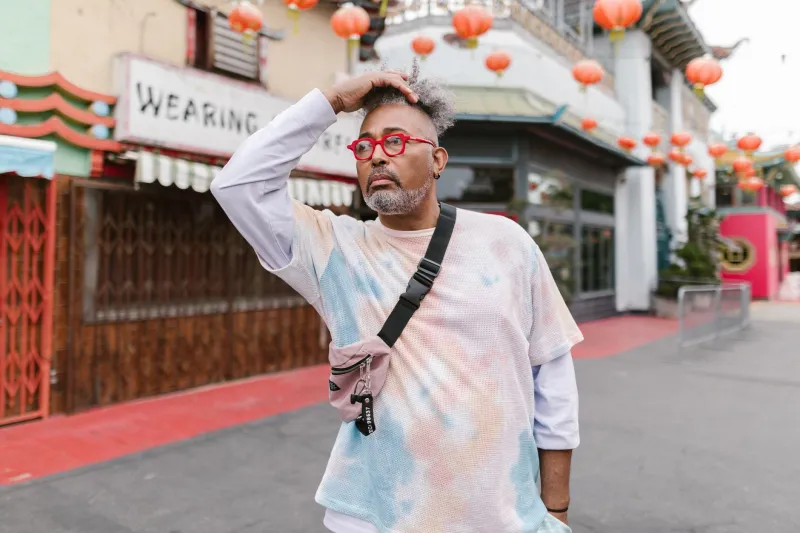
Walk through any major American city on a weekend and pay attention. The oversized graphic tee with a hand-drawn character face. The pastel colorblocking on a skater's outfit. The structured blazer layered over a vintage anime print. The chunky platform shoes and the hair clip shaped like a sakura blossom. None of it announces itself as "anime fashion." It doesn't have to. The aesthetic has been absorbed so thoroughly into the American style vocabulary that it no longer reads as reference — it just reads as cool.
This didn't happen overnight, and it didn't happen by accident.
A Visual Language That Travels Well
Anime has always had a distinctive aesthetic sensibility — bold outlines, expressive character design, a willingness to mix the hyperdetailed with the iconically simple. These qualities translate beautifully to fashion, which is part of why the crossover has been so persistent and so wide-ranging.
The influence doesn't run in a single direction. Japanese street fashion — Harajuku in particular — has long operated in a creative dialogue with anime, borrowing character archetypes, color palettes, and silhouettes. When that aesthetic began reaching American shores through fashion magazines, early internet culture, and the growing anime fanbase of the late 1990s and 2000s, it landed in a culture already primed to receive it.
Hip-hop and streetwear communities were early adopters. The visual boldness of anime — the dramatic poses, the expressive faces, the graphic energy — fit naturally alongside the maximalist sensibility of street style. Rappers were referencing Dragon Ball Z before luxury fashion houses figured out what was happening.
Streetwear's Anime Moment (That Never Really Ended)
The relationship between streetwear and anime is one of American fashion's most durable love stories. It's been building for decades and shows absolutely no sign of cooling.
Supreme has released anime-adjacent graphics repeatedly over the years. Uniqlo's UT line has made officially licensed anime graphic tees a staple of American casual wardrobes — the Naruto, One Piece, and Studio Ghibli collections sell out with regularity that would make any fashion brand envious. Brands like Bape, whose aesthetic has always carried a certain anime-adjacent cartoonish energy, have maintained devoted followings in part because of this overlap.
More recently, smaller streetwear labels built explicitly around anime aesthetics have found loyal audiences. These aren't bootleg operations — they're carefully designed collections that treat anime as a genuine artistic reference point rather than a licensing opportunity. The craftsmanship is often exceptional, and the community around these brands is intensely engaged.
For American consumers, particularly younger ones, wearing anime-influenced streetwear is a form of cultural signaling — it communicates membership in a community, familiarity with a visual tradition, and a certain creative confidence. It says something about who you are without requiring a single word.
When Luxury Came Knocking
The moment that signaled anime's full arrival in the fashion establishment came in pieces, but the signal was unmistakable. Gucci collaborated with Doraemon. Valentino showed collections with references that drew clear lines to anime's visual vocabulary. Louis Vuitton tapped Takashi Murakami — whose entire artistic practice sits at the intersection of anime aesthetics and fine art — for one of the most culturally significant fashion collaborations of the 21st century.
These weren't cynical cash grabs (well, not entirely). They reflected a genuine recognition by luxury fashion's creative directors that anime aesthetics had produced a visual language sophisticated enough to hold its own in high-fashion contexts. The flat graphic quality, the character-driven iconography, the playful subversion of scale and proportion — these elements work in couture because they're genuinely interesting design moves, not just nostalgia bait.
American consumers responded enthusiastically, particularly millennials and Gen Z buyers who grew up with anime and now have the disposable income to spend on luxury goods. The Murakami x Louis Vuitton pieces from the early 2000s have become some of the most sought-after items on the resale market, trading at multiples of their original retail price.
The Independent Designer Wave
Beyond the big brand moments, a quieter revolution has been happening at the independent design level. American fashion designers who grew up as anime fans are now building collections that reflect that influence in ways both overt and subtle.
Some are working with Japanese textile manufacturers to source fabrics that carry traditional craft alongside modern anime-inspired prints. Others are playing with silhouette — the exaggerated proportions of certain anime character designs, the structured drama of a mecha pilot's uniform, the flowing softness of a shōjo heroine's dress — translating those shapes into wearable contemporary pieces.
Etsy and independent brand platforms have made it possible for these designers to reach their audience directly, bypassing the traditional gatekeepers of American fashion retail entirely. The community that supports them is passionate and loyal in ways that mass-market consumers rarely are.
Wearing It Without a Costume
For most American fashion consumers, the question isn't whether to attend a runway show — it's how to incorporate these aesthetics into everyday dressing without looking like you're heading to a convention. The good news is that the integration is easier than you might think, precisely because the influence has already been so thoroughly absorbed into mainstream style.
Start with graphics. A well-chosen anime graphic tee — officially licensed or from an independent artist — pairs with almost anything: straight-leg jeans, a tailored blazer, wide-leg trousers. The key is treating it with the same intentionality you'd bring to any statement piece. Let it be the focal point and build around it.
Color is another entry point. Anime's palette — the saturated pinks, the electric blues, the contrast-heavy combinations — translates beautifully into outfit building. You don't need to wear a character's exact costume to channel their color energy.
Accessories offer the lowest-commitment path in. Hair clips, enamel pins, bags with character charms, jewelry with iconographic shapes — these allow for playful reference without requiring a full outfit commitment. They're also where a lot of the most interesting independent design work is happening right now.
Layering is perhaps the most sophisticated approach. Building an outfit that incorporates anime-influenced pieces — an oversized graphic layer, a structured piece with exaggerated proportions, a color combination that reads as distinctly Japanese streetwear — without any single item screaming "anime" is genuinely skilled styling.
More Than a Trend
What's most striking about anime's influence on American fashion isn't any single moment or collaboration — it's the persistence. Trends come and go in fashion with exhausting speed, but the anime aesthetic keeps returning, keeps evolving, keeps finding new expressions across price points and subcultures.
That staying power reflects something real: anime isn't just a content category that Americans consume. For a generation of fans, it's a genuine cultural touchstone that shaped how they see beauty, drama, identity, and self-expression. When that kind of deep cultural imprinting meets a visual language as rich and adaptable as anime's, fashion isn't just influenced — it's transformed.
The kids who grew up watching Sailor Moon and Naruto are dressing themselves now. And it shows — beautifully.