From Basement Screenings to Prime Time: The Unlikely Rise of Anime in America

There's a moment that longtime anime fans know well. You'd mention Fullmetal Alchemist or Naruto at school, and you'd either get a blank stare or — if you were lucky — a knowing nod from the one other person in the room who got it. That shared glance was its own kind of community. Small, weird, and fiercely protective of something most people didn't understand yet.
That moment is basically extinct now.
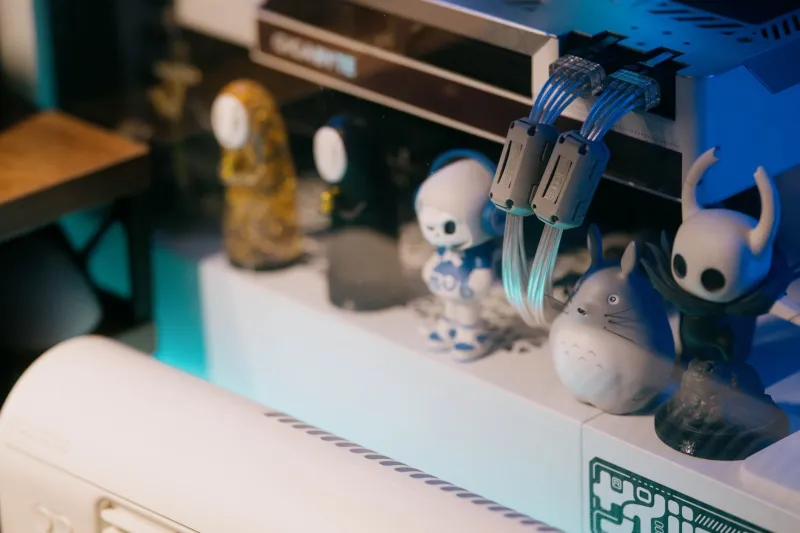
Anime is everywhere. It's on Netflix, Hulu, HBO Max, and Crunchyroll. It's in Target aisles and Hot Topic displays and Funko Pop collections in office cubicles. Demon Slayer broke box office records in the US. Attack on Titan trended on Twitter for years. Jujutsu Kaisen is discussed on sports podcasts. The underground has gone overground — and depending on who you ask, that's either a triumph or a complicated loss.
How We Got Here
To understand where anime stands today, you have to appreciate how unlikely this moment once seemed.
In the late 1980s and through much of the '90s, anime existed in America primarily through VHS tapes traded at conventions, bootleg fansubs passed between friends, and the occasional Toonami block on Cartoon Network that introduced Dragon Ball Z and Sailor Moon to kids who didn't even know they were watching something Japanese. The fandom was passionate and deeply knowledgeable — and almost entirely invisible to mainstream culture.
"We used to drive hours to conventions just to find people who spoke the same language," recalls Derek Tanaka, 41, who's been attending anime conventions since 1998. "There was no Reddit, no Discord, no streaming. You either knew a guy who knew a guy, or you were out of luck."
The internet changed things incrementally throughout the 2000s, but the real inflection point came with streaming. When Crunchyroll shifted from a fan-sub aggregator to a legitimate licensing platform around 2009, and then when Netflix began seriously investing in anime originals and acquisitions in the mid-2010s, the logistics of being an anime fan in America fundamentally changed overnight. You no longer needed to know the right people. You just needed a subscription.
The Streaming Explosion
By 2020, Crunchyroll had over 3 million paid subscribers in the US. Netflix reported that over 100 million households had watched at least one anime title on the platform. These aren't niche numbers — they're blockbuster numbers.
Social media accelerated the spread in ways that are hard to overstate. When Demon Slayer: Mugen Train opened in US theaters in April 2021 and grossed over $21 million in its opening weekend — becoming the highest-grossing foreign-language film in American box office history at the time — it wasn't just anime fans who showed up. It was curious newcomers who'd seen the clips, the memes, the Twitter discourse, and decided they needed to see what the fuss was about.
"TikTok especially has been a game-changer," says Priya Nair, 24, who discovered anime through an algorithm-served clip of Your Lie in April in 2021. "I cried at a 30-second clip before I'd ever watched the show. That's a powerful entry point."
Priya now has a modest anime figure collection, attends two conventions a year, and considers herself a committed fan — all within three years of that first TikTok clip. Her story is increasingly common.
What Longtime Fans Think About It
Here's where it gets complicated.
For every fan like Priya who found a genuine home in the community, there's a longtime otaku processing some complicated feelings about the neighborhood changing. The concerns vary — some are snobbish ("people don't appreciate the classics"), some are legitimate ("corporations are now controlling a medium that used to exist outside their reach"), and some land somewhere in between.
"I'm genuinely happy more people love anime," Derek says carefully. "But there's something that got lost when it stopped being a shared secret. The community used to feel like family because you had to work to find each other. Now it's just... a market segment."
This tension — between accessibility and authenticity, between growth and dilution — is real and worth taking seriously. As major studios pour money into anime adaptations (Netflix's Castlevania, Amazon's investment in Vinland Saga), questions arise about creative control, cultural sensitivity, and whether Western money changes the art form itself.
Anime scholar and podcaster Leah Winters puts it bluntly: "The medium is healthier financially than it's ever been, and creatively more experimental than ever. But the gatekeeping that drove people away was also, weirdly, a filter. Now the loudest voices in the conversation aren't always the most informed ones."
What's Actually Been Gained
For all the hand-wringing, the mainstream moment has delivered real wins that are hard to dismiss.
Representation has expanded. Black, Latino, and South Asian fans — many of whom loved anime for decades but felt invisible in predominantly white fan spaces — are now building their own communities, platforms, and content. Conventions have grown more diverse. Discourse has gotten richer.
Creators have benefited enormously. Studios like MAPPA, Ufotable, and Wit Studio are producing work at a visual quality and narrative ambition that would have been unimaginable twenty years ago, partly because streaming money has raised the ceiling on what's possible.
And new fans — like Priya — are genuine. They're buying merch, attending cons, learning Japanese, and becoming the next generation of passionate advocates for a medium they stumbled into through an algorithm.
Where Does Anime Go From Here?
The honest answer is: further in.
With Crunchyroll and Funimation merged under Sony's umbrella, Netflix doubling down on anime investment, and Hollywood increasingly looking to anime IP for live-action adaptations (some better than others, let's be real), the commercial infrastructure around anime in America is only going to grow.
The more interesting question is whether the art form can maintain its identity as it scales. The best anime has always been weird, specific, emotionally ambitious, and willing to go places Western animation rarely dares. That's what made it worth fighting for in the first place.
If the mainstream embrace keeps that spirit alive, then the old guard and the new arrivals might have more in common than they think. After all, everyone started somewhere — even if some of us started with a VHS tape in someone's basement.