Sewing, Smithing, and Six Figures: The Anime Fandom Jobs Nobody Told You About
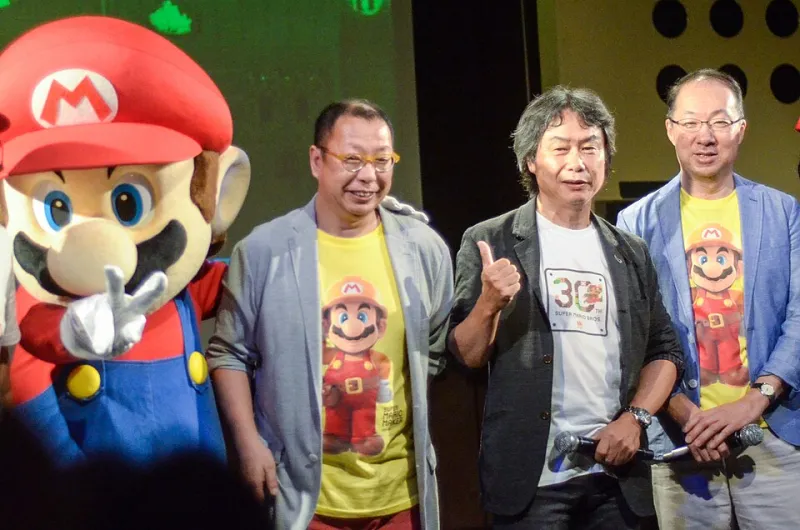
Photo: Nico Hofmann, CC BY-SA 4.0, via Wikimedia Commons
Maya started making cosplay armor in her parents' garage in suburban Ohio when she was seventeen. She used craft foam, heat guns, and YouTube tutorials. She wore her first breastplate to a local convention and got exactly four compliments from strangers — which, she will tell you, was enough.
Ten years later, she runs a prop fabrication studio in Burbank, California. Her clients include a major streaming platform, two video game studios, and a costume house that supplies productions you've definitely seen on Netflix. She did not go to art school. She did not have connections. She had a garage, a heat gun, and ten thousand hours of making things for fun.
Maya's story is unusual, but it's not as rare as you might think.
The Fandom-to-Career Pipeline Is Real
The anime community has always had a DIY culture at its core. Fans make things — costumes, props, fan art, fan fiction, event programming, community content — because they love the source material and want to engage with it more deeply. For most of fandom's history, that work was purely for love, never for money.
That's changing. And the change is happening across a surprisingly wide range of industries.
The skills developed inside anime fandom — prop fabrication, pattern drafting, 3D modeling, community management, event logistics, content creation — are legitimately valuable in professional contexts. The gap between "hobbyist cosplayer" and "working prop maker" is narrower than the film industry sometimes pretends, and a growing number of fans are crossing it.
Prop Making and Costume Engineering
This is probably the most visible pipeline, partly because the entertainment industry's demand for skilled fabricators has grown alongside the explosion of superhero and fantasy content. Productions need people who can build things that look real under camera lights, withstand physical use, and be replicated at scale.
Cosplayers who have spent years solving exactly those problems — how do you make foam armor look like metal? How do you build a wing structure that's lightweight enough to wear for eight hours? — often have practical skills that formally trained prop makers don't.
Entry-level prop fabrication roles at mid-sized studios typically start around $45,000–$55,000 annually, with experienced fabricators and lead prop makers earning anywhere from $70,000 to well over $100,000 depending on the production. Freelance rates vary widely but skilled independent fabricators can charge $50–$150 per hour for specialized work.
The path in usually runs through portfolio building (document everything you make), convention networking (the film industry hires from cosplay communities more than it publicly acknowledges), and online communities where working professionals and serious hobbyists overlap.
Community Management and Social Media
Here's a career path that didn't really exist fifteen years ago and is now one of the most in-demand roles inside anime companies, gaming studios, and entertainment brands targeting fandom audiences.
Community managers for anime-adjacent brands need to understand fandom culture from the inside — they need to know what makes a community tick, what will land as authentic versus corporate, and how to navigate the specific sensitivities of dedicated fan spaces. That knowledge is genuinely hard to teach from scratch. It's much easier to hire someone who already has it.
Salary ranges for community manager roles at anime streaming platforms, gaming companies, and merchandise brands typically fall between $55,000 and $85,000, with senior community managers and directors of community at larger companies earning $90,000–$130,000. Companies like Crunchyroll, Viz Media, and various gaming publishers have all hired community managers directly from fan communities.
Jordan, a community manager at a mid-sized anime merchandise company based in Los Angeles, came up through running a Discord server for a popular shonen series. "I had 40,000 members and I was moderating drama, running events, and managing volunteer staff," he says. "When I applied for the job, my Discord was my resume."
Event Coordination and Convention Operations
The anime convention industry — which, as we've covered here before, has grown into a genuinely massive business — runs on event professionals. Convention coordinators, programming directors, guest relations managers, and operations staff are in consistent demand, and the industry tends to hire people who understand fan culture rather than generic event planners who don't.
Entry-level convention staff roles are often volunteer or low-paid, which is a real barrier worth acknowledging. But mid-level and senior roles within convention organizations and anime companies that run their own events are legitimate professional positions. A programming director at a major anime convention can earn $60,000–$90,000. Guest relations and talent management roles at established conventions often pay similarly.
The skills that transfer most cleanly from fan volunteer work: logistics coordination, vendor management, crisis communication (anyone who has managed a convention panel room understands this), and the ability to manage large groups of enthusiastic, occasionally chaotic people.
Content Creation: The Long Game
It would be incomplete to discuss anime fandom careers without addressing content creation — YouTube channels, podcasts, newsletters, and social media accounts built around anime content. This path is real, but it demands honesty about the economics.
The creator economy is not a stable or accessible path for most people. Ad revenue alone rarely supports a sustainable living until a channel reaches several hundred thousand subscribers. Brand deals and sponsorships are competitive. Burnout is common.
That said, creators who build genuine audiences often find that the content itself becomes a credential that opens other doors — writing for entertainment outlets, consulting for studios, hosting convention panels, or transitioning into brand marketing roles. The audience is the asset, and what you do with it matters.
How to Start Taking Your Skills Seriously
If any of this sounds like a direction you want to explore, a few practical notes:
Document everything. Whether you're making costumes, running a Discord, or organizing fan meetups, treat your work like a portfolio. Photograph it, write about your process, save your metrics.
Network sideways. The anime industry is small and relationship-driven. Other fans who are a few steps ahead of you on the professional path are often the best source of job leads and honest advice.
Take the adjacent skills seriously. A prop maker who also understands 3D printing is more hireable than one who doesn't. A community manager who can read analytics is more valuable than one who can't. The fandom skills are the foundation; the professional skills are what make them portable.
Don't wait for permission. The people who built careers out of anime fandom largely didn't do it by following a prescribed path. They made things, shared them, found communities, and kept going.
Maya, back in Burbank, is currently fabricating armor for a video game promotional campaign. She still has the original craft foam breastplate from her first convention. It's hanging on the wall of her studio, slightly warped from a decade of California heat.
She's kept it there on purpose.