Dubs Done Right: The Quiet Revolution That's Making English Anime Actually Worth Watching
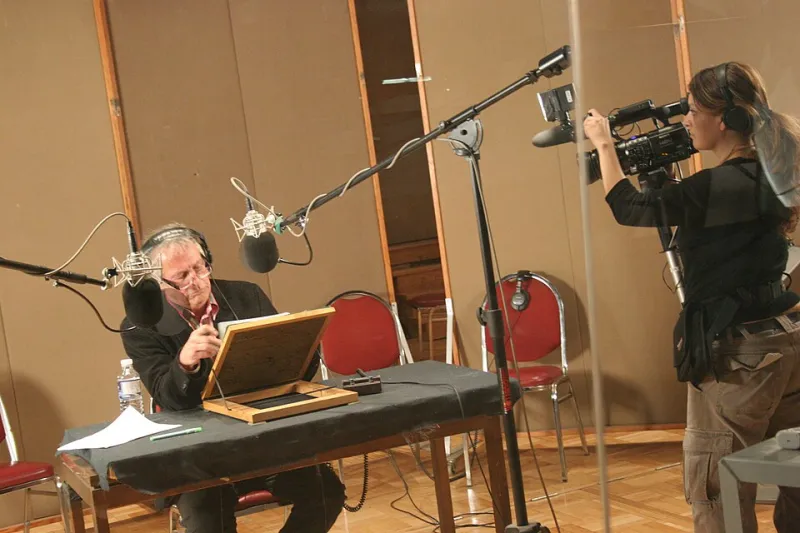
Photo: Kat Baulu, CC BY 2.0, via Wikimedia Commons
Ask any anime fan over the age of 25 about early English dubs, and you'll get a very specific facial expression. It's somewhere between a wince and a laugh — the look of someone recalling a 4Kids localization that turned rice balls into donuts, or a mid-2000s dub where every character sounded like they were reading their lines off a cue card for the first time.
Those days are not entirely gone. But something has shifted in the dubbing world over the past five years, and it's shifted significantly enough that a growing number of American fans — including longtime sub loyalists — are quietly switching their default settings.
What Changed, Exactly?
The short answer is: a lot of things at once.
For starters, the streaming boom fundamentally changed the economics of dubbing. When Crunchyroll, Funimation, and later Netflix began competing aggressively for anime licenses, they also started competing on dub quality. A mediocre dub was no longer just an aesthetic failure — it was a business liability. Platforms needed dubs that could hold mainstream American audiences who weren't already invested in anime culture.
That financial pressure pushed studios to invest more seriously in the craft. Casting directors became more selective. Recording budgets increased. And critically, the pool of available voice talent got dramatically deeper.
"The generation of VAs working now grew up on anime," says one Los Angeles-based casting director who has worked on several high-profile Crunchyroll productions. "They understand the source material emotionally. They're not just reading lines — they're performing characters they actually care about."
The ADR Director Effect
One underappreciated factor in the dub renaissance is the elevated role of the ADR (Automated Dialogue Replacement) director. These are the people responsible for the overall creative vision of a dubbed production — they coach performances, adjust lip-sync timing, and make the countless small decisions that determine whether a dub feels alive or robotic.
In the old model, ADR directors often had limited creative latitude. Localization scripts were frequently over-adapted, stripping out cultural nuance in favor of what executives assumed American audiences could handle. Iconic moments got flattened. Character voices got generically Americanized.
The newer generation of ADR directors has pushed back on that approach. Productions like Chainsaw Man, Jujutsu Kaisen, and Spy x Family have received widespread praise for dubs that preserve tonal complexity — dark humor lands the way it should, emotional scenes don't get softened, and the characters sound distinct from each other in ways that feel intentional rather than accidental.
The Voice Actors Making It Happen
It would be impossible to talk about the dub revival without acknowledging the talent driving it. Voice actors like Zach Aguilar, Jeannie Tirado, Kayleigh McKee, and a dozen others have built genuine fanbases — not as celebrities in the traditional sense, but as performers whose work fans follow across multiple productions.
This is a relatively new phenomenon. For most of dubbing history, English voice actors were largely anonymous. Now they're regulars at convention panels, they interact directly with fans on social media, and their casting announcements generate real buzz.
That visibility creates accountability in the best way. When fans know who voiced a character and care about that actor's work, there's genuine stakes to the performance. It raises the bar.
Sub Fans Are Coming Around — Slowly
The sub-vs-dub debate has been a defining cultural fault line in American anime fandom for decades. Watching in the original Japanese with subtitles was, for a long time, treated as the only legitimate way to engage with the medium. Dub watchers were dismissed as casual, lazy, or simply wrong.
That dynamic is softening. Not disappearing — the internet is still the internet — but softening.
Part of this is generational. Younger fans who came to anime through TikTok and social media recommendations don't carry the same baggage around the sub/dub hierarchy. They'll watch whatever version they encounter first, and if the dub is good, they'll stick with it.
Part of it is also just the quality argument becoming harder to dismiss. When a dub of Vinland Saga or Frieren: Beyond Journey's End is genuinely excellent — when the performances are nuanced and the localization preserves the emotional weight of the original — it's difficult to claim, with a straight face, that the sub is objectively superior in every case.
Why This Moment Matters Beyond the Fandom
The improvement in English dub quality isn't just good news for anime fans. It's good news for anime's continued mainstream expansion in the US.
Subtitles are a barrier for some audiences — not because those audiences are incapable of reading, but because not everyone wants to read while watching television. Parents watching with young kids, people who are visually impaired, anyone who just wants to look up from the screen occasionally — these are real people who benefit from accessible, high-quality dubs.
If anime is going to keep growing beyond its existing fanbase (and all evidence suggests it will), dubs are a critical part of that story. A great dub is an invitation. And right now, more of those invitations are worth accepting than ever before.
The Work Still Left to Do
None of this means everything is perfect. Dub production timelines remain a genuine issue — simultaneous dub releases ("SimulDubs") are more common than they used to be, but many series still have significant delays between the Japanese broadcast and the English dub release. For fans who want to participate in real-time fandom discourse, that gap can be frustrating.
Localization choices also remain inconsistent. Some productions still make baffling decisions — softening explicit dialogue, changing culturally specific references in ways that lose their meaning, or casting voices that don't match the character's established personality.
But the trajectory is clear. English anime dubbing has leveled up in a real, measurable way — and the fans who dismissed it years ago might be surprised by what they've been missing.